
From Philly and the Pa. suburbs to South Jersey and Delaware, what would you like WHYY News to cover? Let us know!
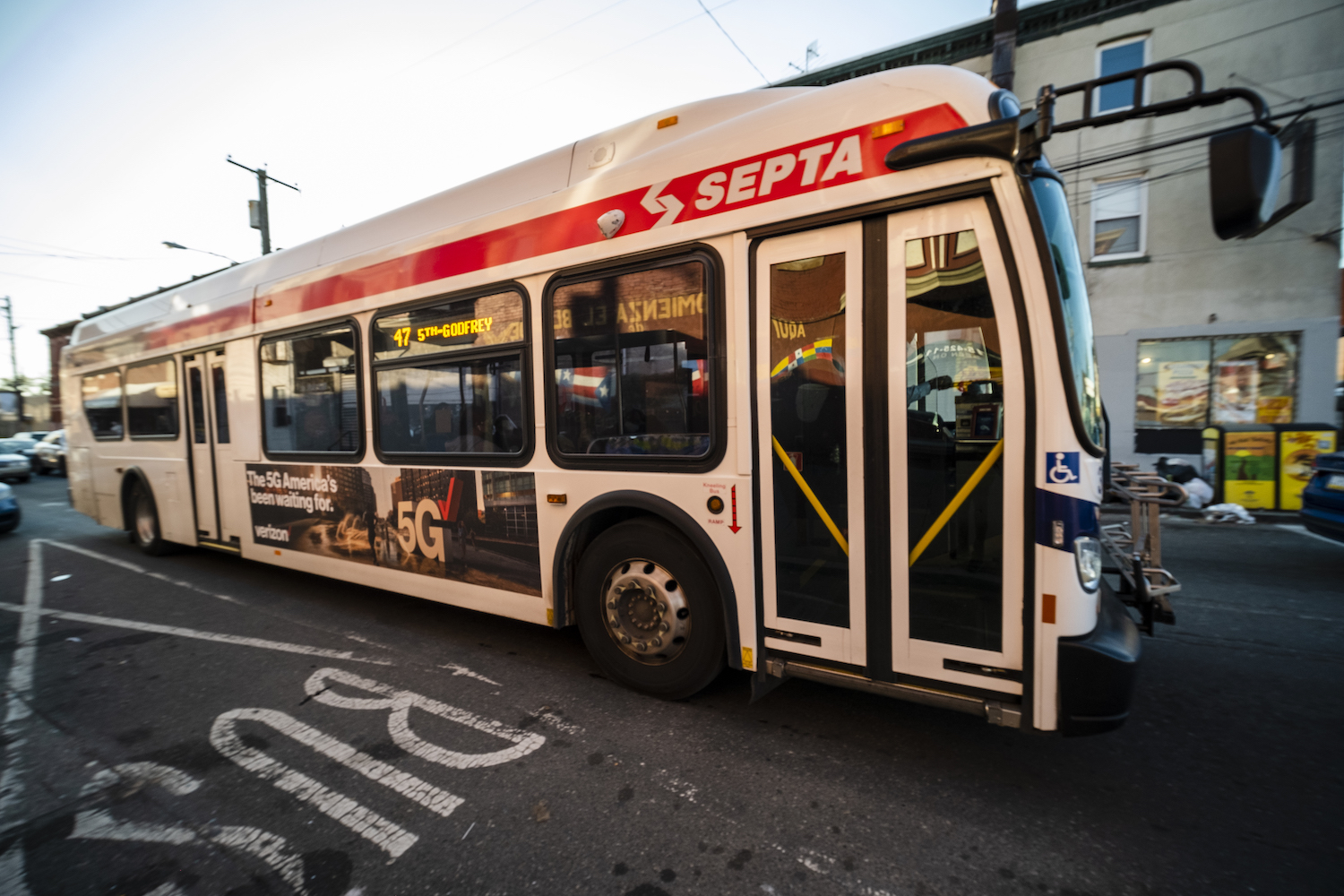
Ciera Drayton, 14, just started high school but already knows the stress of daily commuting. She lives in South Philadelphia but attends Mercy Career and Technical School on the north side. She wakes up at 5 a.m. every day and uses her student SEPTA pass to take two buses, the 47 and 60, to arrive at school around 7:30 a.m.
Her commute can be crowded and chaotic, and paying for public transit is yet another challenge. Her mother had a baby just as the school year began, and finances are tighter than ever, she said.
But free SEPTA rides are limited depending on the day, time and number of rides — limitations that she said are unrealistic to teenagers’ lives.
“I feel like we don’t stop being kids after 8 p.m. We don’t stop being students after Friday,” Ciera said.
That’s why she and other youth, along with adult community leaders, are advocating for an expansion of free student SEPTA passes, removing limitations that have been in place since 2001 to create around-the-clock free rides for all Philadelphia students.
Currently, the student cards, distributed by the School District of Philadelphia, only work when school is in session, meaning no free rides on weekends, holidays or during summer vacation. Students are limited to eight rides per day between 5:30 a.m. and 8 p.m.
Furthermore, only students who live more than 1 1/2 miles from their school are eligible for passes, which excludes more than 30,000 young people, according to Councilmember Rue Landau, who proposed a resolution to examine an expansion.
At an Oct. 6 hearing of City Council’s Committee on Transportation and Public Utilities, Landau said her son used SEPTA constantly throughout his high school years. She said the city and SEPTA impose too many restrictions on student passes, which is especially burdensome for working and low-income families and limits young people’s opportunities around the city.
“Today’s hearing isn’t about getting kids to and from school. This is about Philadelphia being their school,” Landau said. “This is about their education not as teenagers, but as people.”
She said transit is critical to young people’s access to jobs, socialization, culture and civic life — but adults must give them easy access.
“SEPTA is their key to the city, and due to restrictions on student passes, we are holding that key at arm’s length,” Landau said.


